

Jeff Howe
Moderators
-
Joined
-
Last visited
Everything posted by Jeff Howe
-
This isn't directed at you @LonghornFan4Ever, but I refuse to click on that video. The scream-at-people shows have made ESPN unwatchable during the day.
-
I don't know if you get into breaks, but some breakers will sell a spot for all of the paper cards when they break Bowman products.
-
Can someone explain to me why the Big 12 thought it would be a good idea to schedule Texas Tech and TCU on Thanksgiving? Texas tried to start that tradition with both of them. Nobody cared.
-
I liked the basketball Rookie Sensations, too. Also, Fleer Pro Visions were the original Downtown hits!
-
Oh yeah. That conversation with the wife is coming!
-
DeShon had one of the best seasons by a Texas DB that nobody remembers. Sad that it’s kinda been lost in the shuffle of the Strong-to-Herman transition.
-
Those were monster chases back in the day!
-
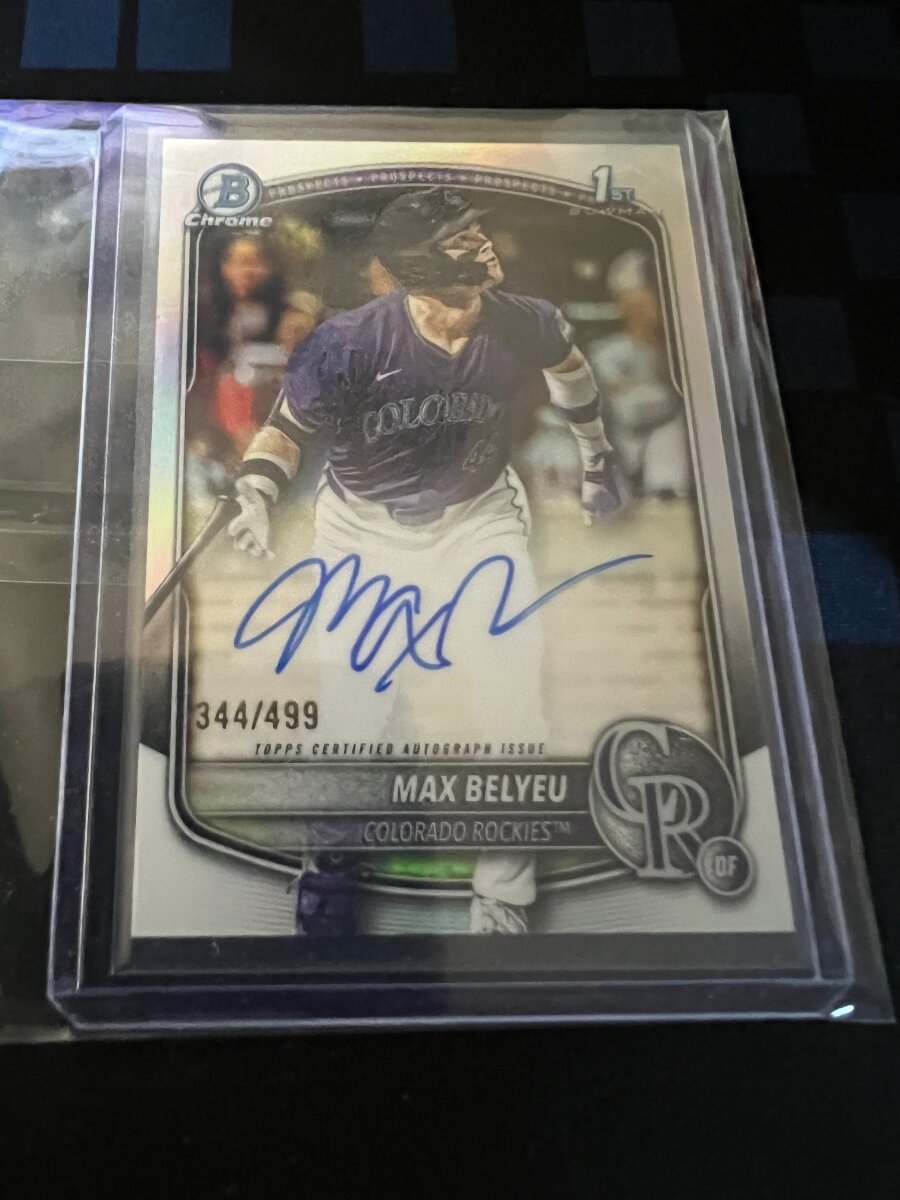
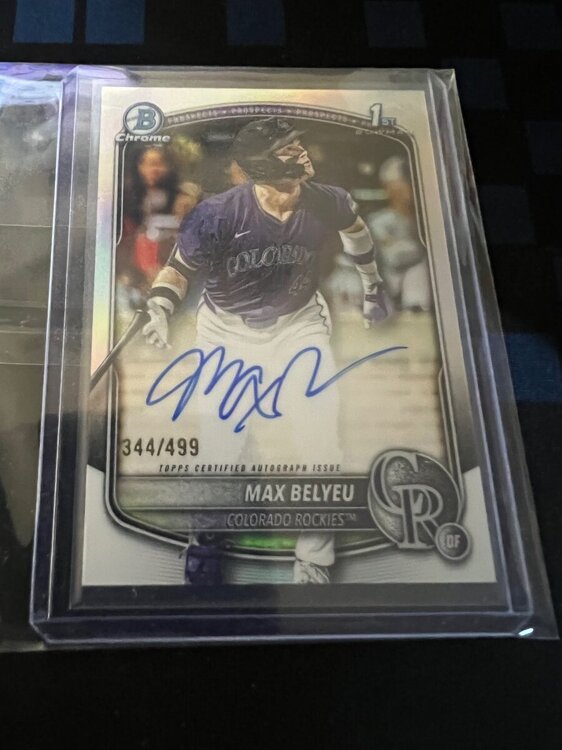
I’m putting together a run of Longhorn 1st Bowman refractor autos. Baseball and Bowman Chrome U. Just picked up Max Belyeu this week:
-
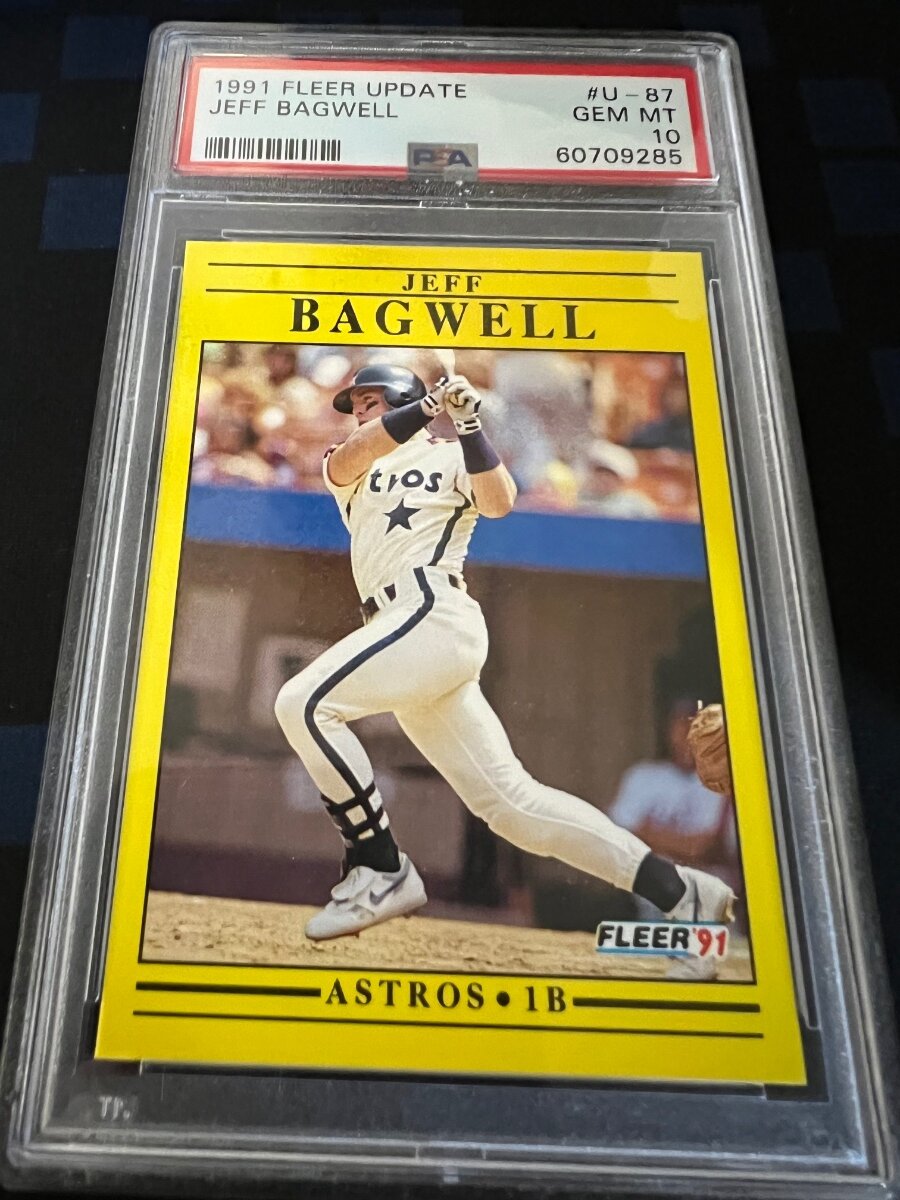
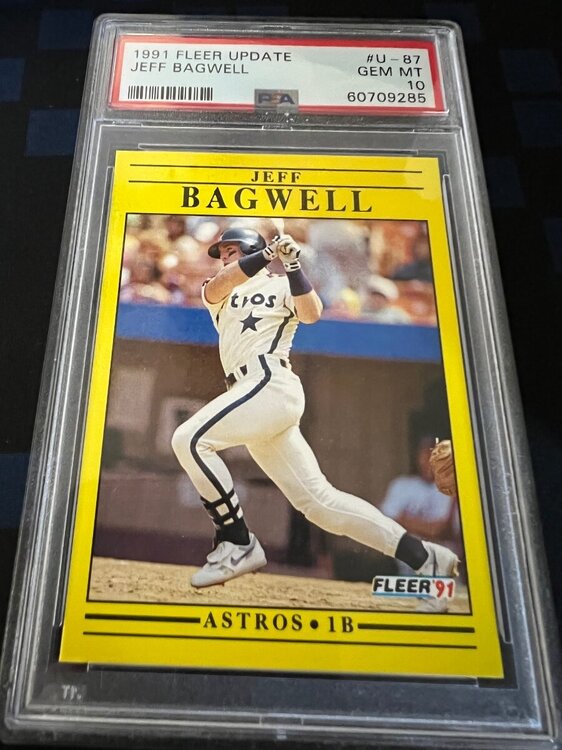
I’ve either got the worst Jeff Bagwell rookie card you can have, or one of the best. ‘91 Fleer is like a movie that’s so bad, it’s good!
-
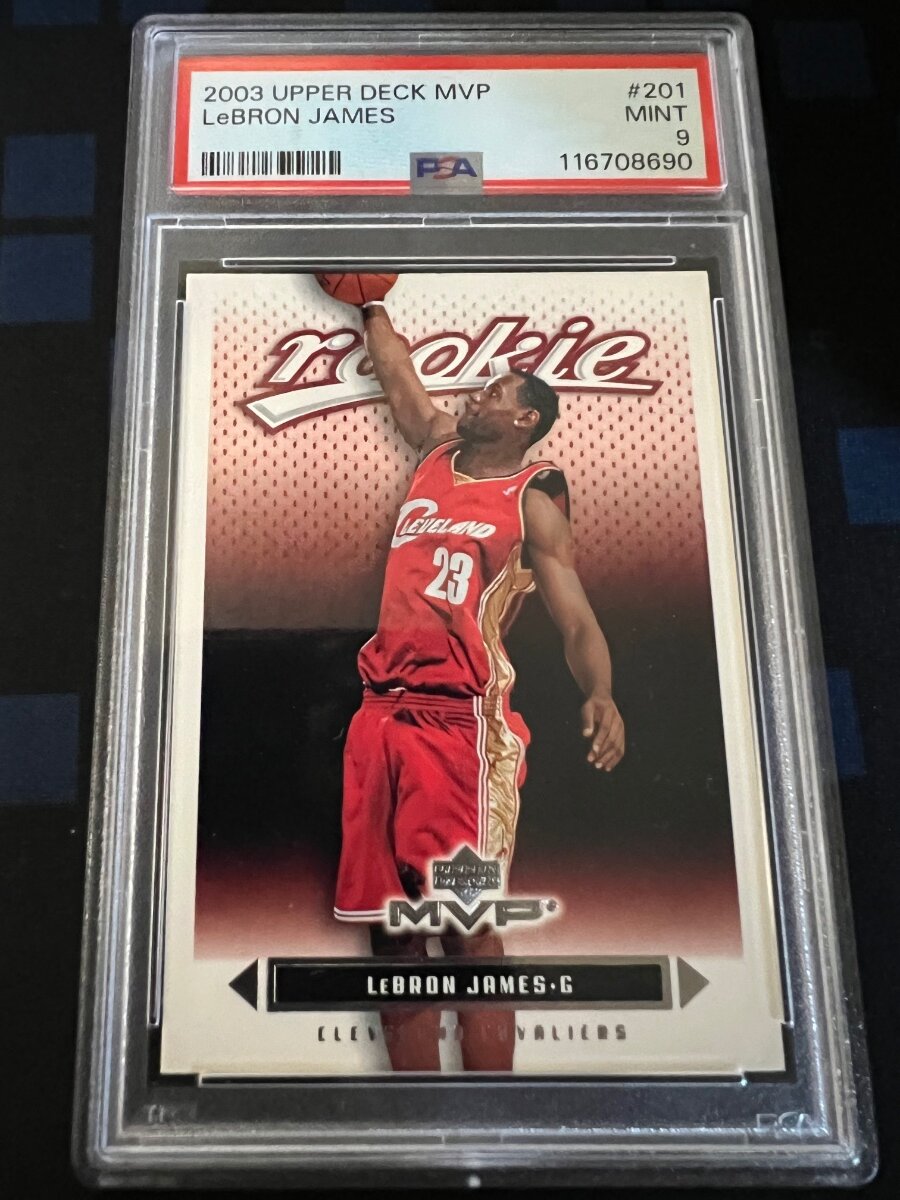
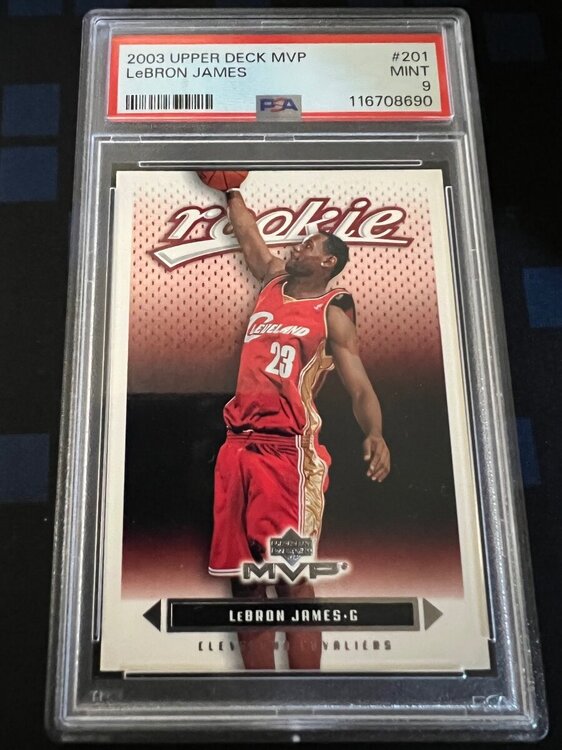
My dad ran a shop in Georgetown when I was a kid. The junk wax boom was nice because you were never too far from a store. Collected pretty much up until I graduated high school, but did buy a LeBron rookie because I figured it would be worthwhile to have down the road. It's not a huge card, but I like that it has gone everywhere with me since 2003.
-
Texas wins the game if either Bert Auburn comes through or Trey Moore doesn't end Carson Beck's Georgia career on the last play of the first half.
-
I forgot how bad it was under Herman. And I'm scared to look back at where Charlie's teams ranked. It's been a problem for a while.
-
He wouldn't be staying in the draft if he didn't have that guarantee. Assuming the Mavericks keep pick No. 30, he won't get by them (and probably won't get by the Nuggets at No. 26, again, if those teams keep those picks).
-
I'd like Swain and Tre Johnson to pan out better than the last time Texas produced back-to-back lottery picks, which was Mo Bamba (2018) and Jaxson Hayes (2019).
-
Not a surprise to OTF subscribers. Best of luck to Dailyn Swain in the NBA. He had a heck of a year for the Longhorns.
-
Texas forward Dailyn Swain is keeping his name in the 2026 NBA Draft, officially forgoing the rest of his collegiate eligibility. “Two feet in” is how Swain is characterizing his draft status, according to ESPN's Jeff Borzello, who reported on Wednesday that Swain has “closed the door” on returning to the Longhorns. On Texas Football has reported since Swain declared for the draft on April 7 that Sean Miller and the Texas staff were building the 2026-27 roster with the idea that Swain wouldn’t return to the Forty Acres. Swain didn't enter his name into the NCAA transfer portal, which meant the Longhorns would've been his only option if he'd decided to return to college. Swain, who participated in the NBA Draft Combine over the weekend, where he measured 6-feet, 6 ½ inches in bare feet and weighed 211 pounds with a 6-foot, 10-inch wingspan and standing reach of 8-feet, 8 ½ inches, is projected to go in the first round of the draft on June 23. Sources have told OTF that the Miami Heat and Oklahoma City Thunder are among the franchises to express the most interest in Swain as he’s gone through the draft process (the Thunder have the 12th and 17th overall picks, while the Heat have the No. 13 overall selection in what’s considered to be a historically deep draft). If Swain is selected in the first round, it will mark the second consecutive draft for the Longhorns to produce a first-round pick. Tre Johnson, the 2024-25 SEC Freshman of the Year, was the sixth overall pick in last year’s draft by the Washington Wizards. It will be the first time Texas has produced back-to-back first-round picks since Jarrett Allen (2017), Mo Bamba (2018) and Jaxson Hayes (2019) went in the first round in three consecutive drafts. Swain would be the 21st Longhorn to go in the first round of the draft. Texas has produced 16 of its 20 first-round picks since 2000, when Chris Mihm went No. 7 overall to the Chicago Bulls (his draft rights were later traded to the Cleveland Cavaliers). Swain’s lone season with the Longhorns was a memorable one, helping Texas reach the Sweet 16, where the team came within a last-second bucket in a 79-77 loss to Purdue from reaching the Elite Eight. A finalist for the Julius Erving Award, which recognizes the top small forward in college basketball, Swain was named SEC Newcomer of the Year by the league’s coaches, who made him a second-team All-SEC selection. A starter in each of the team’s 36 games during the 2025-26 season, Swain led Texas in scoring (17.3 points per game), rebounding (7.5 per game), assists (129 total and 3.6 per game) and steals (59 total and 1.6 per game) while averaging a team-high 32.8 minutes per game. Swain shot a career-high 54.2 percent (214-for-395) from the field, 81.5-percent (163-for-200) from the foul line and a career-best 34.4 percent from 3-point range (32-for-93). Swain reached double figures in scoring in 33 of 36 games, recording 12 20-point games and two 30-point performances, including a career-high 34 points against Mississippi State on Jan. 3. Grabbing a career-high 14 rebounds against the Bulldogs marked one of Swain’s eight double-doubles on the season. Swain played a significant role in the Longhorns finishing Miller's first season with a 21-15 record, including a 9-9 mark in the SEC. Swain, who was recruited by Miller out of high school and transferred to Texas after two seasons at Xavier after Miller was hired by the Longhorns on March 24, 2025, helped Texas earn a No. 22 ranking in the season-ending Associated Press Top 25.
-
Texas forward Dailyn Swain is keeping his name in the 2026 NBA Draft, officially forgoing the rest of his collegiate eligibility. “Two feet in” is how Swain is characterizing his draft status, according to ESPN's Jeff Borzello, who reported on Wednesday that Swain has “closed the door” on returning to the Longhorns. On Texas Football has reported since Swain declared for the draft on April 7 that Sean Miller and the Texas staff were building the 2026-27 roster with the idea that Swain wouldn’t return to the Forty Acres. Swain didn't enter his name into the NCAA transfer portal, which meant the Longhorns would've been his only option if he'd decided to return to college. Swain, who participated in the NBA Draft Combine over the weekend, where he measured 6-feet, 6 ½ inches in bare feet and weighed 211 pounds with a 6-foot, 10-inch wingspan and standing reach of 8-feet, 8 ½ inches, is projected to go in the first round of the draft on June 23. Sources have told OTF that the Miami Heat and Oklahoma City Thunder are among the franchises to express the most interest in Swain as he’s gone through the draft process (the Thunder have the 12th and 17th overall picks, while the Heat have the No. 13 overall selection in what’s considered to be a historically deep draft). If Swain is selected in the first round, it will mark the second consecutive draft for the Longhorns to produce a first-round pick. Tre Johnson, the 2024-25 SEC Freshman of the Year, was the sixth overall pick in last year’s draft by the Washington Wizards. It will be the first time Texas has produced back-to-back first-round picks since Jarrett Allen (2017), Mo Bamba (2018) and Jaxson Hayes (2019) went in the first round in three consecutive drafts. Swain would be the 21st Longhorn to go in the first round of the draft. Texas has produced 16 of its 20 first-round picks since 2000, when Chris Mihm went No. 7 overall to the Chicago Bulls (his draft rights were later traded to the Cleveland Cavaliers). Swain’s lone season with the Longhorns was a memorable one, helping Texas reach the Sweet 16, where the team came within a last-second bucket in a 79-77 loss to Purdue from reaching the Elite Eight. A finalist for the Julius Erving Award, which recognizes the top small forward in college basketball, Swain was named SEC Newcomer of the Year by the league’s coaches, who made him a second-team All-SEC selection. A starter in each of the team’s 36 games during the 2025-26 season, Swain led Texas in scoring (17.3 points per game), rebounding (7.5 per game), assists (129 total and 3.6 per game) and steals (59 total and 1.6 per game) while averaging a team-high 32.8 minutes per game. Swain shot a career-high 54.2 percent (214-for-395) from the field, 81.5-percent (163-for-200) from the foul line and a career-best 34.4 percent from 3-point range (32-for-93). Swain reached double figures in scoring in 33 of 36 games, recording 12 20-point games and two 30-point performances, including a career-high 34 points against Mississippi State on Jan. 3. Grabbing a career-high 14 rebounds against the Bulldogs marked one of Swain’s eight double-doubles on the season. Swain played a significant role in the Longhorns finishing Miller's first season with a 21-15 record, including a 9-9 mark in the SEC. Swain, who was recruited by Miller out of high school and transferred to Texas after two seasons at Xavier after Miller was hired by the Longhorns on March 24, 2025, helped Texas earn a No. 22 ranking in the season-ending Associated Press Top 25. View full news story
-
I can get that breakdown.
-
Here's how the national champions in the CFP era have performed regarding penalties. As a reminder, this was Texas in 2025: 8.3 penalties per game (No. 134 in FBS); 69.7 penalty yards per game (No. 132 in FBS) Indiana (2025) — 3.8 PPG (T-5th in FBS); 27.6 PYPG (No. 2 in FBS) Ohio State (2024) — 4.5 PPG (T-11th in FBS); 40.8 PYPG (No. 16 in FBS) Michigan (2023) — 3.0 PPG (T-1st in FBS); 27.5 PYPG (No. 3 in FBS) Georgia (2022) — 4.4 PPG (No. 12 in FBS); 47.3 PYPG (T-39th in FBS) Georgia (2021) — 5.1 PPG (T-26th in FBS); 42.5 PYPG (No. 20 in FBS) Alabama (2020) — 6.0 PPG (T-60th in FBS); 48.1 PYPG (No. 48 in FBS) LSU (2019) — 6.2 PPG (No. 72 in FBS); 62.4 PYPG (No. 107 in FBS) Clemson (2018) — 4.87 PPG (No. 24 in FBS); 44.9 (No. 28 in FBS) Alabama (2017) — 5.0 PPG (No. 31 in FBS); 40.6 PYPG (No. 22 in FBS) Clemson (2016) — 6.33 PPG (T-73rd in FBS); 58.0 PYPG (T-85th in FBS) Alabama (2015) — 5.6 PPG (No. 45 in FBS); 55.7 PYPG (No. 67 in FBS) Ohio State (2014) — 5.6 PPG (No. 50 in FBS); 47.7 PYPG (No. 43 in FBS)
-
This probably won't be the last time I write about penalties. Nevertheless, I wanted to look at the national champions in the CFP era and figure out how much Texas must improve for penalties to no longer be a deterrent to winning a title. Six or fewer penalties per game and 45 or fewer penalty yards per game should be a fair place to set the bar for improvement in 2026.
-
Any time Texas’ potential to win the national championship in 2026 is discussed, penalties will almost certainly be cited as a legitimate lingering issue that could derail the Longhorns’ efforts to return to the College Football Playoff. After Steve Sarkisian’s first season, when Texas averaged 5.8 penalties (No. 55 in FBS) and 48.3 penalty yards per game (No. 48 in FBS), both per-game averages continued to steadily rise. The 2023 squad ranked 95th in the country in penalties per game (6.6) and finished a 14-game season tied for 70th nationally in penalty yards per game (52.2). The Longhorns appeared to be at least leveling off in 2024, averaging 6.4 penalties and 51.8 penalty yards per game en route to 13 wins and a second consecutive trip to the CFP semifinals. Unfortunately, things took an unexpected turn in 2025, resulting in the penalty issues under Sarkisian coming to a head. Texas ranked 134th nationally in penalties per game (8.3) last season, making the Longhorns the most penalized Power Four team in the country and the third-most penalized team in FBS. An average of 69.7 penalty yards per game was the second worst in the Power Four (SMU averaged 70.8 penalty yards per game) and the fifth worst in FBS. Sarkisian’s 2026 club doesn’t need to be as disciplined as Indiana was in 2025 (3.8 penalties per game tied for the fifth fewest in the country and 27.6 penalty yards per game was the second best average in FBS) to be the last team standing when the dust settles on the 12-team CFP. Nevertheless, Texas can’t be as undisciplined as it was last season (108 total penalties were a school record and only nine Longhorn teams averaged more penalty yards per game than the 2025 team) and expect to reach the summit unscathed. Each of the last five national champions (Indiana, Ohio State in 2024, Michigan in 2023 and Georgia in 2022 and 2021) finished inside the top 30 nationally in penalties per game and inside the top 40 in the country in penalty yards per game. Furthermore, the last three champions finished tied for first (Michigan), tied for 11th (Ohio State) and tied for fifth (Indiana) nationally in penalties per game, while ranking third (Michigan), 16th (Ohio State) and second (Indiana) in FBS in penalty yards per game, respectively. College football's talent is disbursed more equitably, thanks to dynamics like NIL, revenue sharing and the transfer portal. It’s arguably more important than ever to play disciplined football because the talent gap at the top of the sport isn’t as wide as it was a few years ago. Still, of the 12 national champions in the CFP era, LSU in 2019 and Clemson in 2016 are the only two that finished ranked outside of the top 60 nationally in penalties and penalty yards per game. It took Joe Burrow leading one of the most prolific offenses in college football history, along with a defense chock-full of future NFL players, for Ed Orgeron’s team to overcome a No. 107 ranking in penalty yards per game (62.4), which the worst among any national champion in the CFP era. Quarterbacked by Deshaun Watson, who was one of five future first-round draft picks suiting up for the Tigers in 2016, the first title-winning squad coached by Dabo Swinney averaged 6.3 penalties per game, making them the most penalized national champion in the CFP since the CFP replaced the Bowl Championship Series in 2014. The Longhorns are talented, perhaps historically so, entering Sarkisian’s sixth season. Are they talented enough to absorb an absurd number of self-inflicted wounds and hit their ceiling? Regardless, the Texas faithful can view the program’s potential improvement in a glass-half-full light because Sarkisian has shown he can right the ship. After Tom Herman’s 2020 team was one of the most penalized in the country, averaging 8.1 penalties and 77 penalty yards per game, Sarkisian oversaw those marks improving by 2.3 penalties and 28.7 penalty yards per game in his first season on the Forty Acres. Such an improvement would put the 2026 Longhorns on track for an average of six penalties and 41 penalty yards per game, which would’ve tied for 65th and 26th in FBS last season, respectively. Six penalties per game would match the number committed by Alabama in 2020, when Sarkisian was the offensive coordinator for Nick Saban’s record-breaking seventh national title as a head coach; 41 penalty yards per game would be on par with Ryan Day’s Buckeyes in 2024 (40.8 penalty yards per game) among recent national champions. Whether Texas makes those specific strides or gets within the ballpark of doing so, the numbers show how much more disciplined the Longhorns must be year over year to reach their desired destination.
-
Any time Texas’ potential to win the national championship in 2026 is discussed, penalties will almost certainly be cited as a legitimate lingering issue that could derail the Longhorns’ efforts to return to the College Football Playoff. After Steve Sarkisian’s first season, when Texas averaged 5.8 penalties (No. 55 in FBS) and 48.3 penalty yards per game (No. 48 in FBS), both per-game averages continued to steadily rise. The 2023 squad ranked 95th in the country in penalties per game (6.6) and finished a 14-game season tied for 70th nationally in penalty yards per game (52.2). The Longhorns appeared to be at least leveling off in 2024, averaging 6.4 penalties and 51.8 penalty yards per game en route to 13 wins and a second consecutive trip to the CFP semifinals. Unfortunately, things took an unexpected turn in 2025, resulting in the penalty issues under Sarkisian coming to a head. Texas ranked 134th nationally in penalties per game (8.3) last season, making the Longhorns the most penalized Power Four team in the country and the third-most penalized team in FBS. An average of 69.7 penalty yards per game was the second worst in the Power Four (SMU averaged 70.8 penalty yards per game) and the fifth worst in FBS. Sarkisian’s 2026 club doesn’t need to be as disciplined as Indiana was in 2025 (3.8 penalties per game tied for the fifth fewest in the country and 27.6 penalty yards per game was the second best average in FBS) to be the last team standing when the dust settles on the 12-team CFP. Nevertheless, Texas can’t be as undisciplined as it was last season (108 total penalties were a school record and only nine Longhorn teams averaged more penalty yards per game than the 2025 team) and expect to reach the summit unscathed. Each of the last five national champions (Indiana, Ohio State in 2024, Michigan in 2023 and Georgia in 2022 and 2021) finished inside the top 30 nationally in penalties per game and inside the top 40 in the country in penalty yards per game. Furthermore, the last three champions finished tied for first (Michigan), tied for 11th (Ohio State) and tied for fifth (Indiana) nationally in penalties per game, while ranking third (Michigan), 16th (Ohio State) and second (Indiana) in FBS in penalty yards per game, respectively. College football's talent is disbursed more equitably, thanks to dynamics like NIL, revenue sharing and the transfer portal. It’s arguably more important than ever to play disciplined football because the talent gap at the top of the sport isn’t as wide as it was a few years ago. Still, of the 12 national champions in the CFP era, LSU in 2019 and Clemson in 2016 are the only two that finished ranked outside of the top 60 nationally in penalties and penalty yards per game. It took Joe Burrow leading one of the most prolific offenses in college football history, along with a defense chock-full of future NFL players, for Ed Orgeron’s team to overcome a No. 107 ranking in penalty yards per game (62.4), which the worst among any national champion in the CFP era. Quarterbacked by Deshaun Watson, who was one of five future first-round draft picks suiting up for the Tigers in 2016, the first title-winning squad coached by Dabo Swinney averaged 6.3 penalties per game, making them the most penalized national champion in the CFP since the CFP replaced the Bowl Championship Series in 2014. The Longhorns are talented, perhaps historically so, entering Sarkisian’s sixth season. Are they talented enough to absorb an absurd number of self-inflicted wounds and hit their ceiling? Regardless, the Texas faithful can view the program’s potential improvement in a glass-half-full light because Sarkisian has shown he can right the ship. After Tom Herman’s 2020 team was one of the most penalized in the country, averaging 8.1 penalties and 77 penalty yards per game, Sarkisian oversaw those marks improving by 2.3 penalties and 28.7 penalty yards per game in his first season on the Forty Acres. Such an improvement would put the 2026 Longhorns on track for an average of six penalties and 41 penalty yards per game, which would’ve tied for 65th and 26th in FBS last season, respectively. Six penalties per game would match the number committed by Alabama in 2020, when Sarkisian was the offensive coordinator for Nick Saban’s record-breaking seventh national title as a head coach; 41 penalty yards per game would be on par with Ryan Day’s Buckeyes in 2024 (40.8 penalty yards per game) among recent national champions. Whether Texas makes those specific strides or gets within the ballpark of doing so, the numbers show how much more disciplined the Longhorns must be year over year to reach their desired destination. View full news story
-
Maybe, but I doubt it. They might try Bing again. I wouldn't be surprised if, in a fourth starter role needed for an elimination game in a regional, they went with someone like Leffew as an opener and it would be a bullpen game from there.
-
-
Schloss is also in favor of pushing the start of the season back to March. He also wants to look at changing the postseason format to two additional best 2-out-of-3 series instead of the four-team, double elimination regional so that it mimics the regular season.